Call us today: 720-800-9495
Home > Transportation/ Trucking
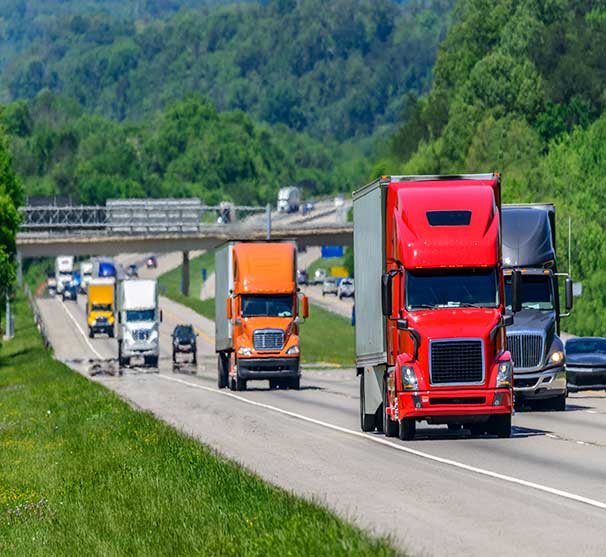
The transportation industry has hit quite a few bumps over the last several years as a result of a litigious landscape marked by an aggressive plaintiff bar and multi-million-dollar liability verdicts. Add to this the difficulty in finding qualified drivers, distracted driving and an aging infrastruture that have all contributed to a rise in catastrophic accidents. The fallout has been an insurance market characterized by higher premiums, scaled-back capacity and tighter underwriting guidelines, leaving the transportation sector searching for competitive Automobile coverage.
Mountainside Insurance Management can help you secure the transportation insurance you need. We have the markets and long-term relationships to do so even in this difficult marketplace.

The transportation industry encompasses a wide range of vehicle types of which we insure, including:
Whether you are an owner-operator with one truck or a fleet with dozens, we build trucking insurance programs around how you actually operate. Common coverages include:
Need coverage for work trucks and vans rather than freight hauling? See our commercial auto insurance for fleets. Ready to talk? Call (720) 800-9495 or request a quote.
Bobtail coverage applies when a truck is being driven without a trailer attached and not under dispatch — for example, driving back to base after a delivery. Non-trucking liability (NTL) covers the truck when it’s not under dispatch but may have a trailer attached, often used by owner-operators leased to a motor carrier during personal-use time. Both are narrower and less expensive than primary auto liability, but coverage gaps occur if a driver assumes they’re covered under one when the situation actually calls for the other — confirming which applies to your specific operation matters.
The MCS-90 endorsement is a federal requirement proving your liability policy meets the minimum financial responsibility levels set by the FMCSA for interstate motor carriers. It doesn’t add coverage — it’s a guarantee to the public that, even if your policy has exclusions that would otherwise apply, the insurer will still pay up to the federal minimum and then seek reimbursement from you. Carriers operating in interstate commerce generally can’t get their operating authority without it on file.
Only up to your policy’s stated limit, and only for covered causes of loss as defined in your policy — most cargo policies have exclusions for certain commodity types (like jewelry, currency, or live animals) unless specifically scheduled, and many carry per-occurrence limits that may be lower than the full value of a high-value load. It’s worth confirming your cargo limit matches the typical value of loads you actually haul, not just a generic industry-standard limit.
Actual Cash Value (ACV) pays the depreciated market value of the vehicle at the time of loss, determined by the insurer using comparable sales data. Stated value coverage pays the value you and the insurer agreed to in writing when the policy was written, which can be useful for vehicles with custom equipment or specialized builds where market comparables are hard to find — but be aware that some “stated value” policies still cap the payout at ACV if it’s lower, so read the exact policy language rather than assuming stated value guarantees that full number.
Insurers weigh your CSA (Compliance, Safety, Accountability) score, out-of-service violation rates, and driver qualification file completeness heavily when underwriting and pricing a trucking risk. A strong safety record with documented driver qualification files (MVRs, medical certificates, road test results) under 49 CFR Part 391 can meaningfully lower premiums, while unresolved CSA violations or a pattern of out-of-service citations often leads to higher rates or non-renewal at your next term.
Yes — your trucking liability policy typically only covers vehicles you own or have under a long-term lease that’s specifically scheduled on the policy. If your business occasionally rents a truck, uses an employee’s personal vehicle for business errands, or hires a vehicle short-term, you generally need Hired and Non-Owned Auto (HNOA) coverage to close that gap, since your standard fleet policy won’t extend automatically to vehicles outside your scheduled list.
Trucking insurance premiums depend on your radius of operation, the commodities you haul, truck and trailer values, driver records and experience, claims history and the limits you carry. A single owner-operator and a regional fleet can pay very different rates. We shop multiple carriers and work to find coverage that fits your operation and your budget. Call (720) 800-9495 for a quote.
Carriers that operate under their own authority generally need primary liability coverage that meets federal and state minimums for the freight they haul, along with the required insurance filings. Brokers and shippers often also require cargo coverage and specific limits. Requirements vary by operation, and we can walk you through what applies to you before you apply.
Yes. We place coverage for owner-operators and small carriers as well as larger fleets. If you lease on with another carrier, we can also help you understand which coverages you need to carry yourself, such as non-trucking liability, and which the carrier provides.
Some of the general and industry-specific insurance products we can secure for you, depending on your operation, include:
We can assist you Colorado filing for the Motor Carrier Permit, UIIA filing for container haulers, or USDOT filing.
Our staff will work with you to help prevent accidents and injuries with a strong loss-control program, driver training and education, the adoption of technology to monitor drivers, and other measures that illustrate your commitment to reducing claims.
CALL US TO DISCUSS YOUR INSURANCE
NEEDS TODAY: (720) 800-9495
Talk to an Expert
An expert representative will contact you immediately.